

Generac Generators: Everything Homeowners Need to Know
What Generac actually makes
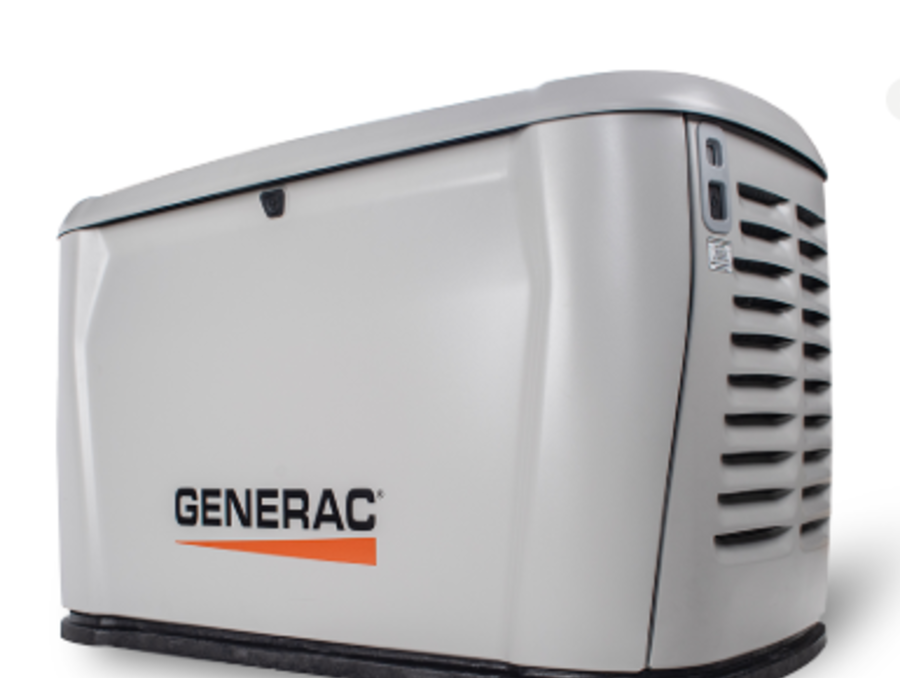
Generac Power Systems is a Wisconsin-based manufacturer that designs and builds a wide range of power equipment. For a homeowner, the relevant slice is the residential standby lineup: permanently installed generators that sit outside the house, connect to a fuel line, and start automatically when the grid fails.
Within that slice, the first meaningful division is how the engine is cooled.
Air-cooled versus liquid-cooled, and why it matters to you
Air-cooled units
Air-cooled generators use a fan and moving air to manage engine temperature, the same basic idea as a motorcycle engine. They are smaller, lighter, less expensive to buy, and less expensive to install because the pad and the clearances are more modest.
For the overwhelming majority of single-family homes in Hillsborough and Pasco counties, an air-cooled unit is the correct answer. The category now reaches far enough up the output range to cover homes that would once have required something much larger.
Liquid-cooled units
Liquid-cooled generators use a radiator and coolant, like a car. They are physically larger, they cost more to buy and install, and they belong on very large residences, properties with unusually heavy electrical demand, or commercial applications.
If a quote puts a liquid-cooled unit on an ordinary suburban home, that is worth a direct question about why.
The lineup terminology that trips people up
Two names come up constantly in homeowner research, and they get conflated.
Guardian is Generac's long-running air-cooled series and the name most people recognize. Within that series, Generac has published that its 26 kW unit is the largest air-cooled home standby generator on the market, and the company positions it as capable of whole-house coverage on homes that previously would have required a liquid-cooled system.
Generac has since introduced a newer air-cooled range, commonly described as the Next Gen air-cooled series, which extends the output ceiling further and uses updated engines, enclosures, and electronics. A 28 kW air-cooled unit belongs to that newer series. It is not a Guardian, and describing it as one is a common error in dealer marketing and consumer forums alike.
This is not pedantry. Series matters for parts, for compatible accessories, and for what a technician expects when they open the enclosure.
The features that actually show up in daily ownership
Spec sheets are long. Four things tend to matter to how the system feels once it is installed.
Automatic operation. The transfer switch detects the outage, starts the unit, and moves the house over without anyone doing anything. It reverses the process when utility power returns and stabilizes.
Power quality. Generac's True Power technology is designed to deliver a clean output waveform so that electronics, variable-speed motors, and modern appliances are not fed rough power.
Self-test behavior. The unit runs a periodic self-test on a schedule. Generac's Quiet-Test feature runs that test at a lower engine speed than normal operation, which matters more than you would think in a neighborhood with close lot lines.
Remote monitoring. Mobile Link lets you see the generator's status from a phone or computer, which is the difference between knowing your house is fine and driving home to find out.
Fuel: what the same unit does on gas versus propane
A Generac air-cooled unit can generally be configured for natural gas or liquid propane, and the field conversion is straightforward at the time of install.
The output rating is not identical between the two. The same physical machine is rated differently depending on which fuel it is burning, which means comparing two quotes requires comparing them on the fuel you will actually use. A number quoted on propane and a number quoted on natural gas are not directly comparable.
In much of Hillsborough and Pasco, natural gas is distributed by Peoples Gas System. Because the distribution network is underground, it typically continues operating through the wind events that take down overhead power lines, which is the practical case for natural gas in this region: unlimited runtime through the outage that actually happens here.
Authorized Dealer and Certified Installer are two different things
This is the part of the research that most homeowners skip and later wish they had not.
A Generac Authorized Dealer has a direct relationship with the manufacturer to sell Generac equipment. A Generac Certified Installer has met the manufacturer's requirements for installing it. They are separate designations, and a company can hold one without the other.
Tampa Backup Generators is both a Generac Authorized Dealer and a Generac Certified Installer. When you are comparing companies, ask for both by name, and note whether the answer is specific or vague.
There is a third credential that sits underneath both of them and is non-negotiable in Florida: the company installing the system must be a Florida State Certified Electrical Contractor, and the license number should be visible on their advertising and their paperwork.
Why the installer decides more of the outcome than the badge on the enclosure
Two identical Generac units can produce very different ownership experiences depending on what happened during the install.
The size has to come from a real load calculation on your real panel, not from a square-footage rule of thumb. The transfer switch has to be configured to match what you actually expect to have powered. The pad has to be built to the right elevation if the property sits in a flood hazard area. The clearances from windows, doors, and vents have to match the manufacturer's installation instructions, because that is what the inspector will check against. The permit has to be pulled in the right jurisdiction, with the Notice of Commencement recorded before the first inspection, and the rough-in and final inspections have to be scheduled and passed.
None of that is visible in a brochure. All of it is visible in the questions a company asks you before they quote.
Get a Generac Sized for Your House, Not a Catalog
Tampa Backup Generators is a family-owned Generac Authorized Dealer and Generac Certified Installer serving Hillsborough and Pasco counties. We perform the load calculation at your home, recommend the correct series and size, and handle permitting and inspection coordination from start to activation.
Call 813-921-2072 to schedule your free in-home assessment.
Tampa Standby LLC | Florida State Certified Electrical Contractor | License #EC13015605
Frequently Asked Questions
No. Guardian is Generac's established air-cooled series, and its air-cooled output tops out at 26 kW. A 28 kW air-cooled unit belongs to Generac's newer Next Gen air-cooled range. Confirm the exact series and model number on any quote you receive.
Authorized Dealer describes the sales relationship with the manufacturer. Certified Installer describes meeting the manufacturer's installation requirements. They are separate, and a company may hold one without the other. Tampa Backup Generators holds both.
Most single-family homes are well served by an air-cooled unit. Liquid-cooled systems are for very large residences, unusually heavy electrical demand, or commercial applications. A load calculation on your panel is what settles it.
Generac's air-cooled home standby units are generally configurable for either fuel, and that configuration is set at installation. The unit's rated output differs between the two fuels, so quotes should be compared on the fuel you will actually use.
Normal operation is comparable to a large air conditioning condenser. The periodic self-test runs at a reduced engine speed under Generac's Quiet-Test feature, which keeps the routine exercise cycle quieter than full-load operation.
Yes. Generac produces a broad range of power equipment across residential, commercial, and industrial applications. For a homeowner shopping backup power, the relevant category is the residential automatic standby lineup.